

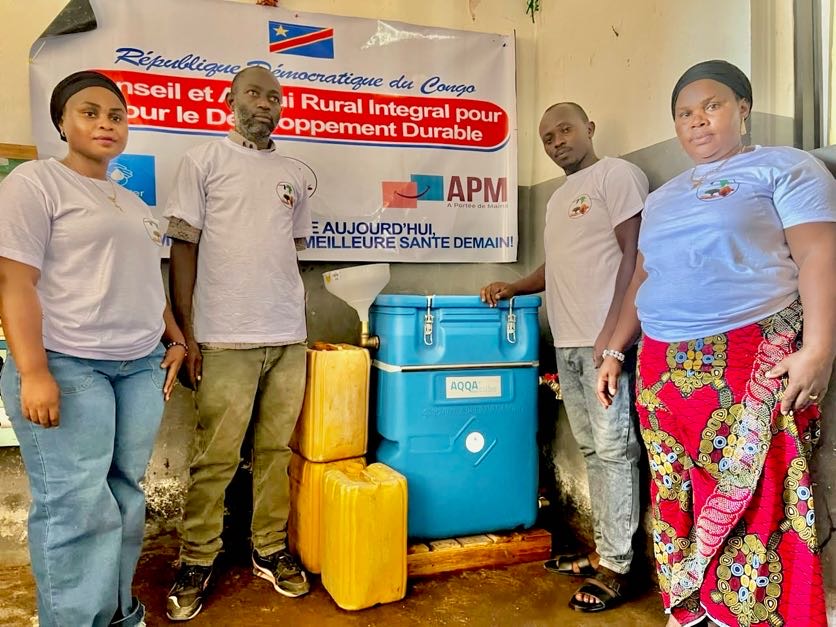
In the east of the Democratic Republic of the Congo, in the province of South Kivu, we work with our partner organisation À Portée de Mains (APM). Sango Shila and his team know the people, the roads and the challenges on the ground. Over the past two years, together we have brought clean drinking water to schools, health centres and refugee camps. Here is an overview of what has come of it.
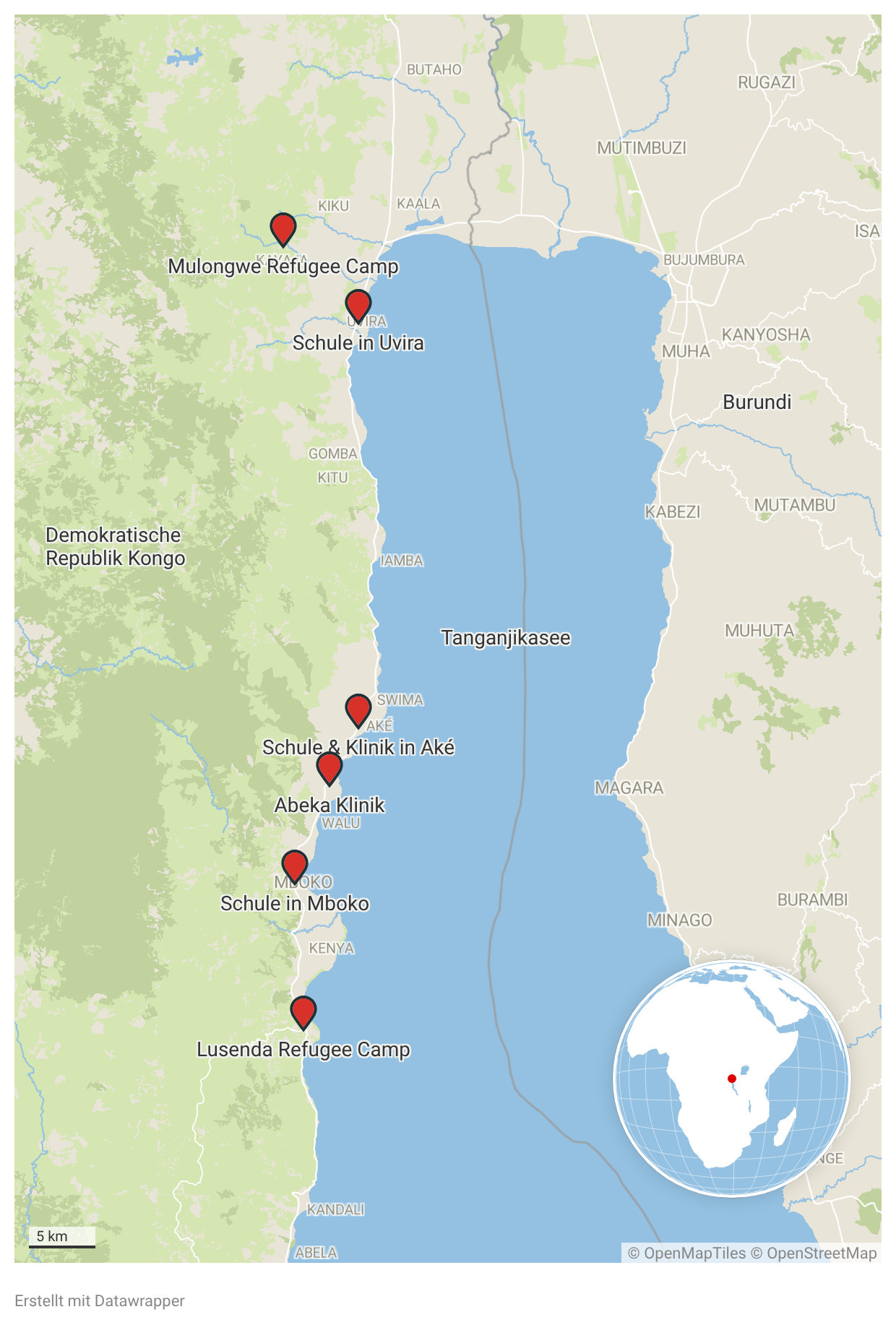
At a glance: 6 sites · 17 AQQAcube filters · 1 rainwater tank
How we work: A filter is only the beginning
Clean water should not only flow on the day of installation, but for years to come. That is why every one of our projects includes ongoing monitoring. The APM team visits all filters regularly and disinfects and services them every six months. Membranes are cleaned or replaced, and people on site are trained in how to use and care for the systems properly. At the same time, APM collects data on how often the filters are used and how people’s health is changing. This way we can see whether our work is making a difference, and step in before something breaks.
1. Our first project in the Congo: APM’s school and clinic in Ake
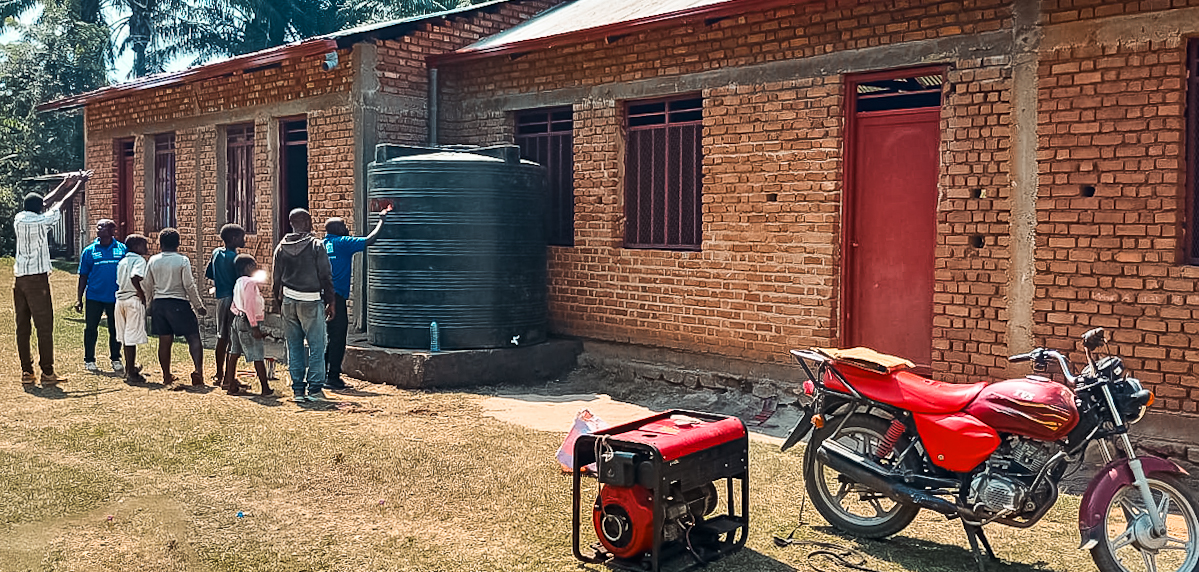
This is where our work in the DR Congo began. We got in touch with APM in 2024, and in January 2025 we installed one AQQAcube filter each at the primary school APM runs itself and at the clinic attached to it. Since then, 230 students, their 12 teachers and the clinic’s patients have been drinking clean water. But a filter needs water to filter, and in the dry season especially, water was scarce. So in May 2026 we built a rainwater harvesting system with a 5,000-litre tank at the school. Now the supply is secure even when it doesn’t rain for a long time. According to a survey by APM, cases of diarrhoea, cholera and typhoid fell by up to 89% at the school and by around 64% at the clinic. In other countries such as Kenya and Uganda, we have been building rainwater systems for communities for some time with good results, which is why we want to continue these sustainable infrastructure projects in the Congo as well.
2. Azina School in Mboko
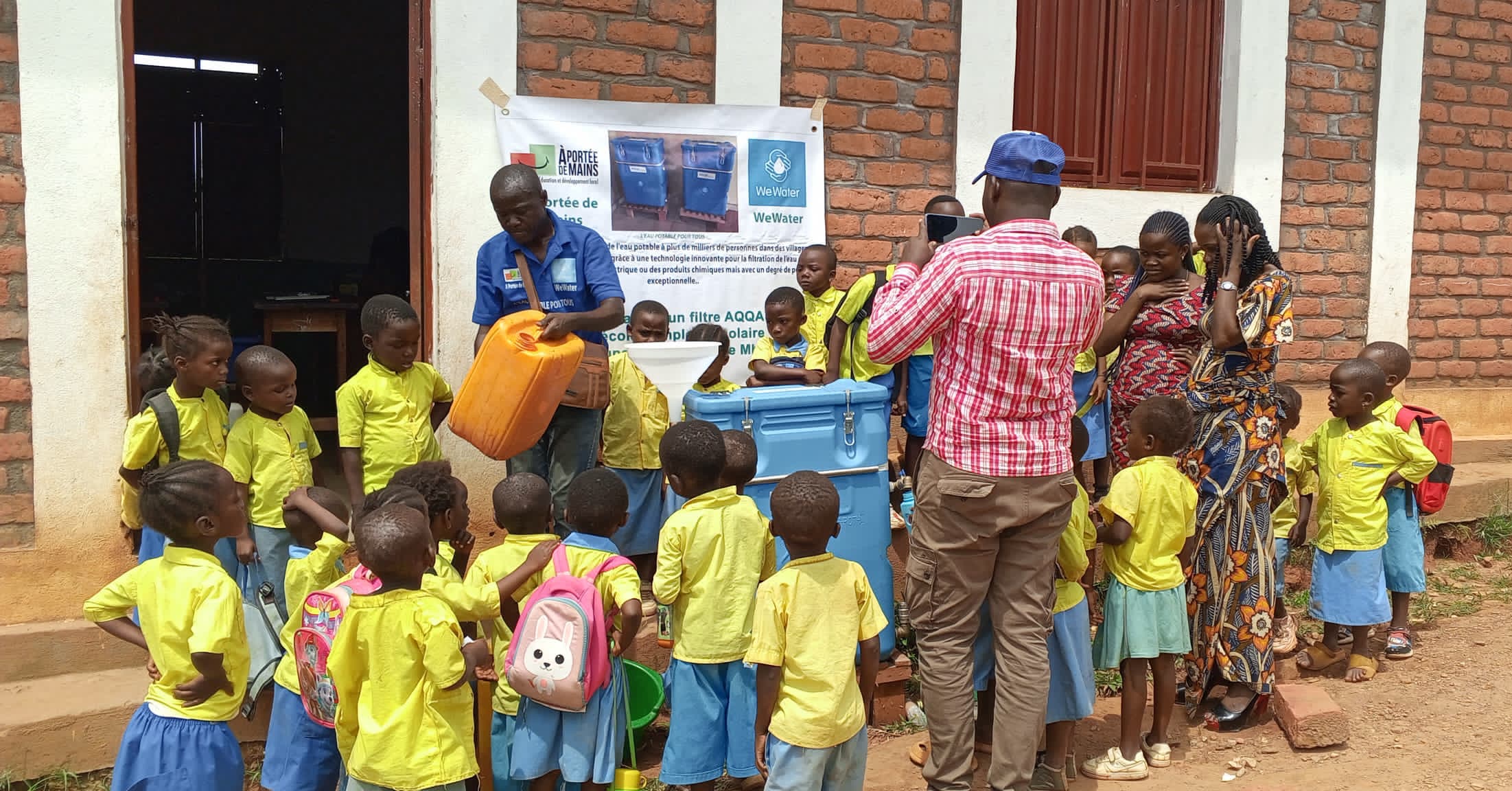
The Azina community school in the village of Mboko, Fizi Territory, asked APM for a filter so that its 205 students, from kindergarten to secondary level, would have clean drinking water. Until then, the water came from Lake Tanganyika, rivers and wells, and it was contaminated with bacteria. An AQQAcube has been in place at the school since May 2025. It has drastically reduced the number of days students miss school. They can now concentrate better on learning.
3. Lusenda and Mulongwe refugee camps
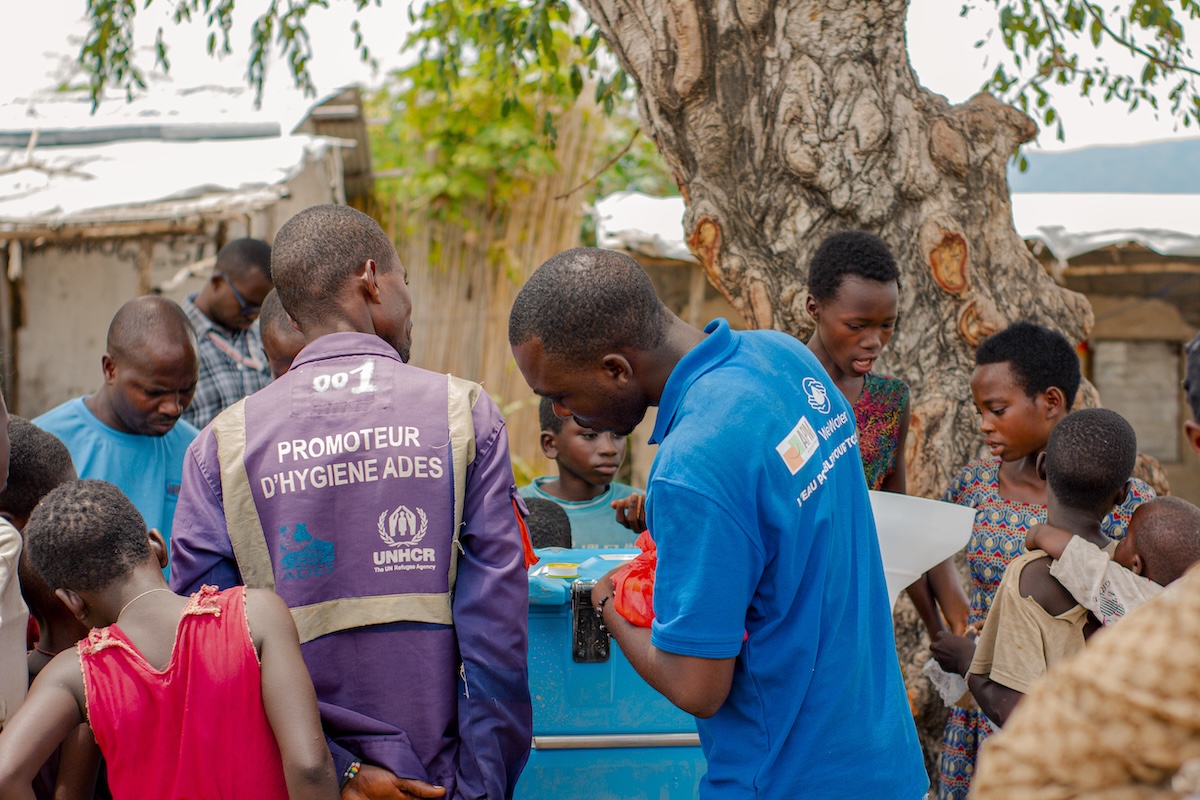
More than 45,000 refugees from Burundi live in the two camps. Since the USAID funding cuts, there are hardly any organisations left working on water and hygiene here. The situation is precarious; Mulongwe was opened because there was no more room in Lusenda. In two phases, we set up 12 AQQAcube filters, six in each camp. Around 7,500 households now have access to clean drinking water. Getting there was a long journey: the filters came via Bujumbura to Uvira, by boat across Lake Tanganyika to Baraka, and from there by four-wheel drive into the camps. To keep them working in the long term, local contact persons from the camps take care of them day to day. According to a survey by APM, there has been a significant decline in cases of diarrhoea, cholera and typhoid. But we are also honest: the need is greater than we can meet on our own. Still, every additional filter means that hundreds more families no longer have to fear getting sick from drinking water.
4. Abeka Clinic
People in the village of Kabumbe get their water from Lake Tanganyika or the Kabumbe River, some walking more than five kilometres to do so. Around 8,000 people live in and around the village. The Abeka Health Centre treats up to 50 patients a day, many of them with illnesses caused by contaminated water. Yet the centre itself had no clean drinking water. Since May 2025, it has had its own AQQAcube filter.
5. Secondary school in Uvira
Our newest project: just in time for the start of the school year in September 2026, we delivered an AQQAcube to the CARIDD school in Uvira. Until then, its 1,026 students fetched their water from polluted water sources. A lab test found dysentery pathogens and around three times the permitted level of germs. Now there is clean drinking water right at the school. But for so many children, one filter is not enough in the long run. That is why we are working with the school to find a solution.
Looking ahead: Moving forward together
Each of these sites shows what is possible when people on the ground and supporters here work together. Lars has shown us how much one person can achieve. The 21-year-old WeWater supporter cycled from Heidelberg to Istanbul, aiming to raise one euro in donations for every kilometre. And he did it: his fundraiser on Betterplace brought in around €3,000, and with it Lars is fully funding our next project:
6. Child and Family Centre Ananda, Fizi Territory
In the village of Ananda, a Child and Family Centre is currently being completed: a safe place where children can play, learn and find calm, regardless of their background or religion. Many of them are affected by the consequences of the war in the east of the country. There is no clean drinking water there yet: the water from wells, the river and the lake is contaminated with bacteria, and the children have to walk 5 to 8 kilometres just to fetch water. Because APM still has filters in stock in Uvira from our last shipment, there are no costs for international transport or customs. The roughly €3,000 covers the filter, local transport, the water analysis, the installation and the first six-monthly maintenance.
Would you like to support us? With your donation, you bring clean water to more schools, clinics and camps, and help keep the existing filters running for a long time to come.


